When Politics Meets Morality: The Political Thought of Gandhi
Mahatma Gandhi, a towering figure of the Indian freedom struggle, developed a unique political ideology that was deeply rooted in moral philosophy, spirituality, and humanism.
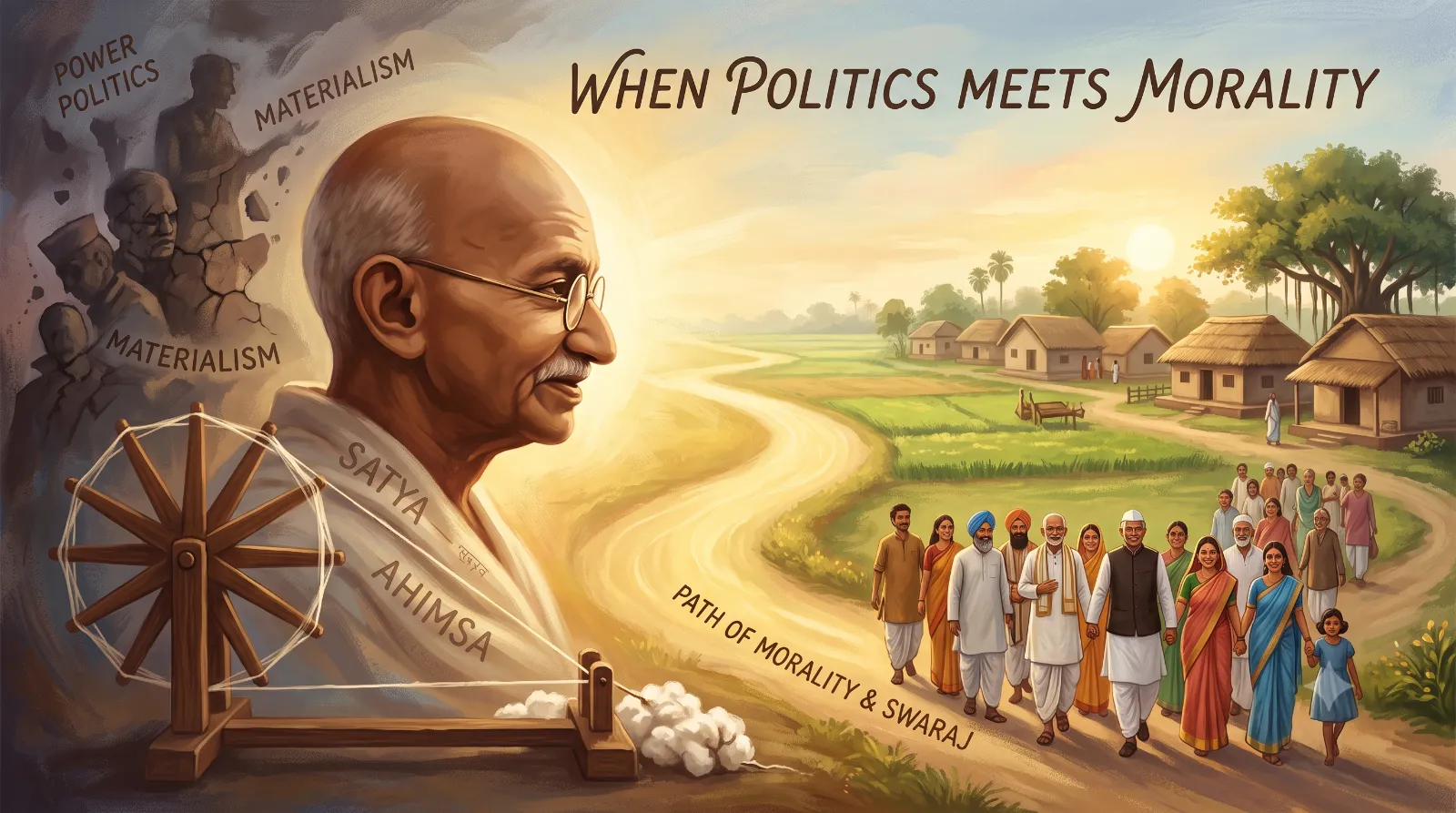
Mahatma Gandhi, a towering figure of the Indian freedom struggle, developed a unique political ideology that was deeply rooted in moral philosophy, spirituality, and humanism.
Mahatma Gandhi, a towering figure of the Indian freedom struggle, developed a unique political ideology that was deeply rooted in moral philosophy, spirituality, and humanism.
His political thought was not confined to the traditional structures of power, governance, or party politics.
Instead, it emphasized ethical conduct, non-violence, self-rule, and social justice.
Gandhi’s ideology was both a guiding philosophy for India’s independence movement and a broader vision for human civilization based on truth and non-violence.
At the heart of Gandhi’s political ideology were the principles of truth (Satya) and non-violence (Ahimsa).
He believed that truth was the ultimate reality and that the search for truth should guide all human activity, including politics.
For Gandhi, politics was a form of service to humanity and must be governed by moral values rather than self-interest or power.
Non- violence was not merely the absence of physical violence but an active force of love and compassion.
He argued that sustainable change could only come through peaceful means, and that violence only bred further violence.
These ideas were the foundation of his strategy of Satyagraha, or non-violent resistance, which became a powerful tool against British colonial rule.
Gandhi’s conception of Swaraj or self-rule was another cornerstone of his political thought.
While it included the demand for national independence from British imperialism, Gandhi gave Swaraj a much deeper meaning.
He envisioned Swaraj as self-governance at every level individual, village, and national.
True freedom, in his view, required self-control, moral responsibility, and decentralization of power.
He advocated for Gram Swaraj village self- sufficiency and local self-government where each village would function as a small republic, managing its own affairs without exploitation or inequality.
Gandhi was critical of modern industrial civilization and representative democracy as practiced in the West.
He believed that the Western model, based on materialism and competition, led to dehumanization and moral decay.
Instead, he promoted a civilization of service, simplicity, and spiritual growth.
His opposition to industrialization was not a rejection of progress but a concern for the impact of large-scale industrial systems on human dignity, employment, and the environment.
In this regard, he promoted Khadi (hand-spun cloth) and village industries as symbols of economic independence and resistance to colonial exploitation.
Gandhi’s political ideology also placed great emphasis on inclusive nationalism and communal harmony.
He envisioned an India where people of all religions, castes, and communities could live together with mutual respect.
He opposed untouchability and worked actively for the upliftment of Dalits, whom he called Harijans (children of God).
His efforts toward Hindu- Muslim unity, though often challenged and ultimately failing to prevent Partition, reflected his deep commitment to the idea of India as a pluralistic and moral community.
Another distinctive feature of Gandhi’s political philosophy was his rejection of power politics and centralized authority.
He did not believe in the use of state power for social reform, preferring voluntary change through moral persuasion.
Even after India’s independence, Gandhi did not seek formal office and was critical of the Congress Party's turn toward centralized governance.
He believed that real democracy was not about majority rule or political parties but about the individual's moral capacity to govern themselves and serve others.
In conclusion, Mahatma Gandhi’s political ideology was a radical departure from conventional political thought.
It combined spiritual depth with pragmatic action, ethical values with mass mobilization, and individual discipline with collective struggle.
His vision was not just for an independent India, but for a just, non-violent, and self-reliant society.
Even today, Gandhi’s ideas continue to inspire movements for justice, peace, and freedom around the world, reminding us that politics, at its best, can be a form of moral and transformative action.
Refrences
1.
M.K.
Gandhi, Hind Swaraj or Indian Home Rule (1909). 2.
M.K.
Gandhi, An Autobiography: The Story of My Experiments with Truth (Navajivan Publishing House, 1927–1929). 3.
M.K.
Gandhi, Constructive Programme: Its Meaning and Place (Navajivan Publishing House, 1941). 4.
M.K.
Gandhi, Harijan, various issues, particularly Gandhi’s writings on untouchability, communal harmony and social reform. 5.
Bhikhu Parekh, Gandhi’s Political Philosophy: A Critical Examination (Palgrave Macmillan, 1989). 6.
Judith M.
Brown, Gandhi: Prisoner of Hope (Yale University Press, 1989). 7.
Dennis Dalton, Mahatma Gandhi: Nonviolent Power in Action (Columbia University Press, 1993). 8.
B.R.
Nanda, Mahatma Gandhi: A Biography (Oxford University Press, 1958).
Comments
You may also like
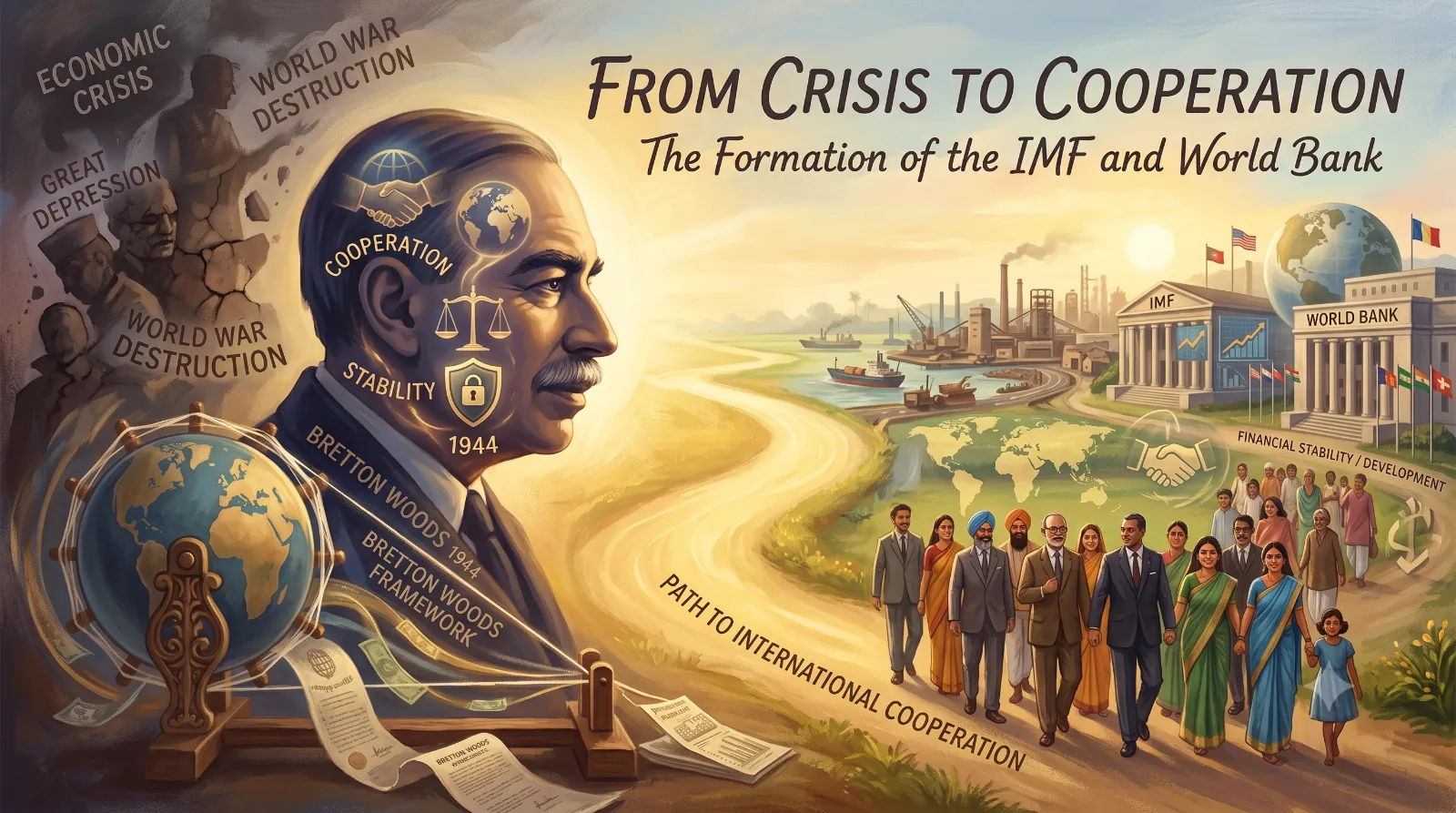
From Crisis to Cooperation: The Formation of the IMF and World Bank
What happens when the economic problems of one country begin to affect the rest of the world?
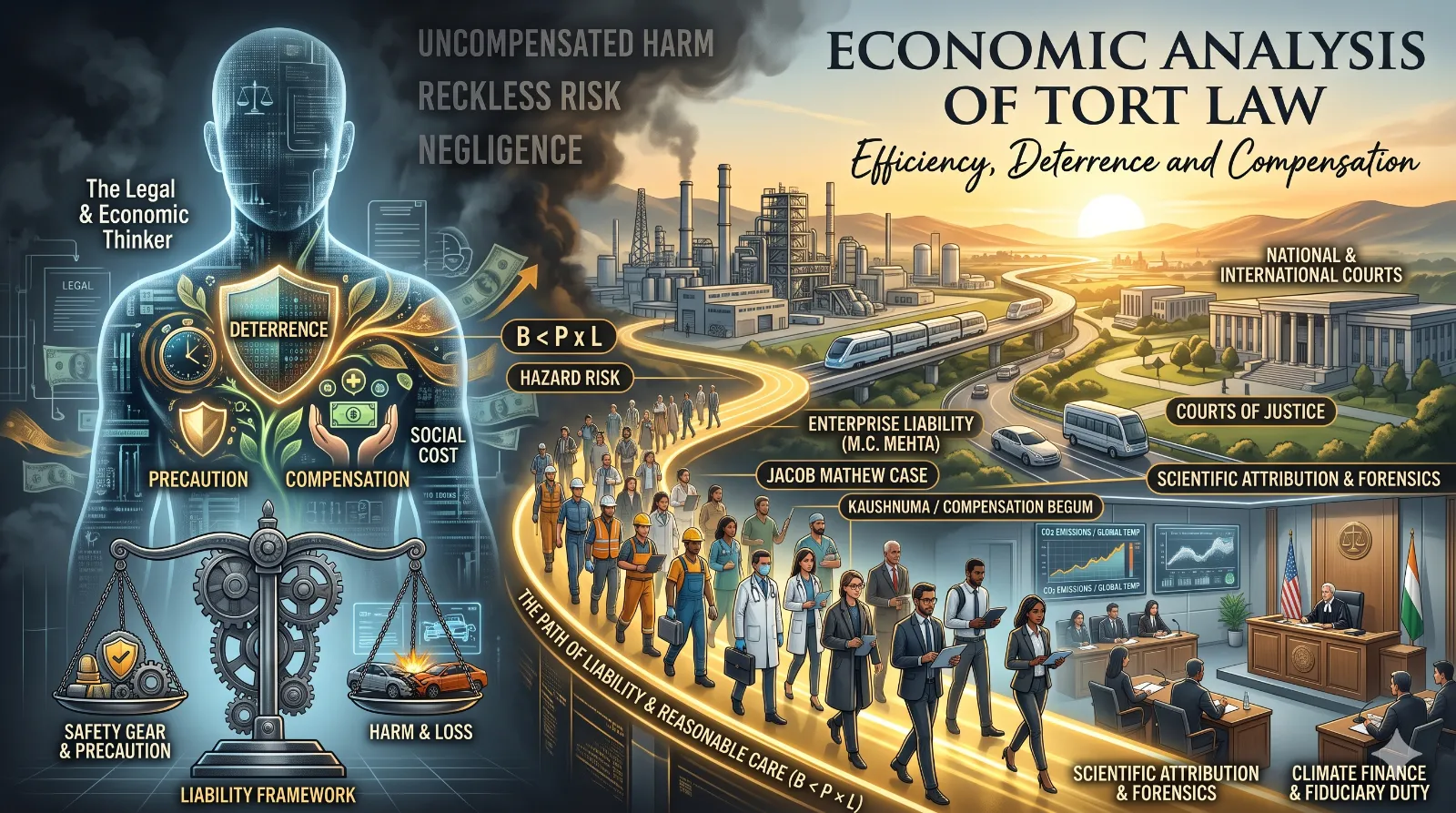
Economic Analysis of Tort Law: Efficiency, Deterrence and Compensation
When someone causes harm to another person, tort law asks a familiar question: who should bear the loss?
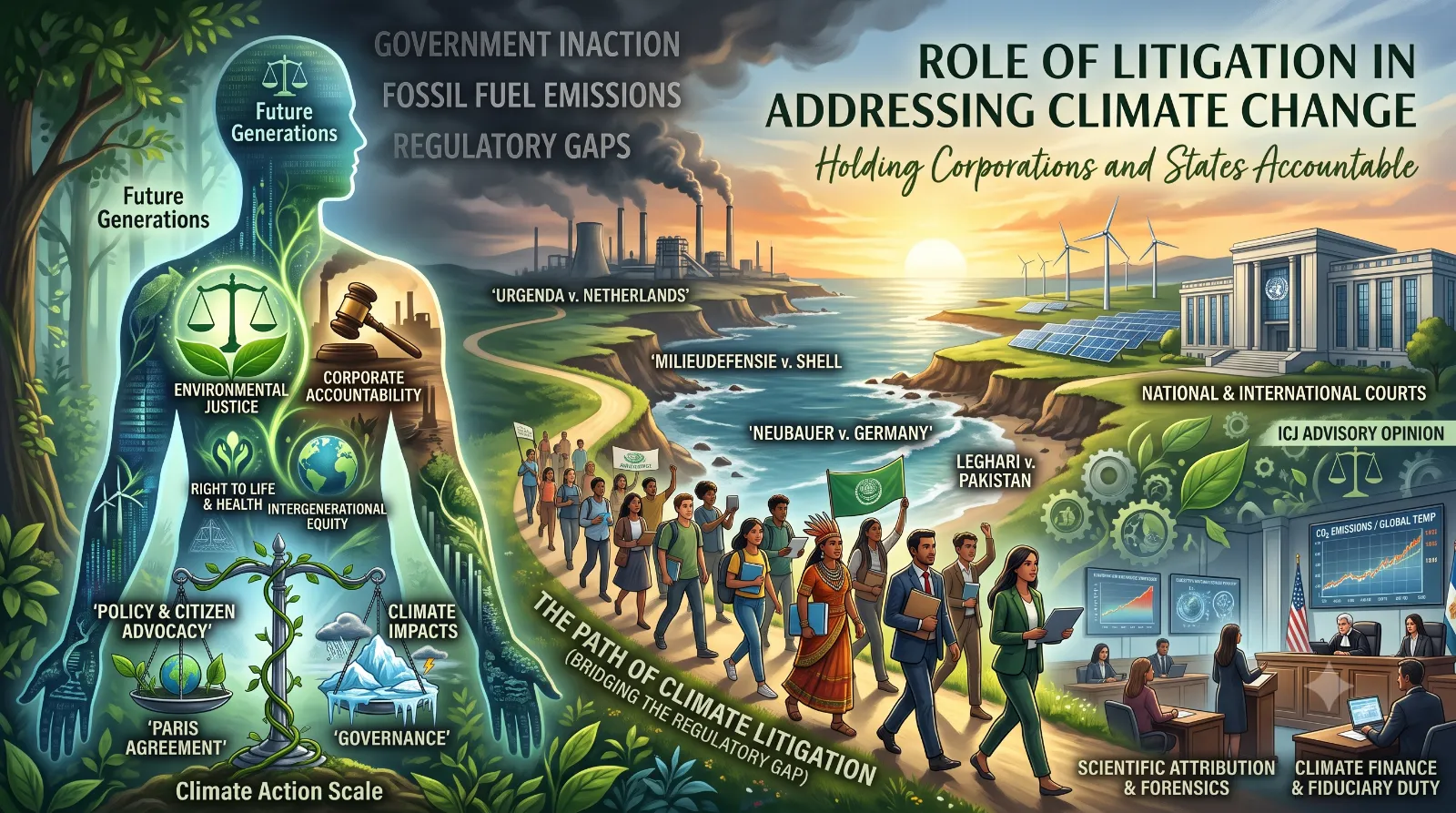
Analysing the Role of Litigation in Addressing Climate Change
Climate change, caused by the buildup of greenhouse gases (GHGs) in the atmosphere, has resulted in increasing global temperatures, occurrence of extreme weather events, melting glaciers, and sea level rise. The inability of some governments and corporations to fulfill their climate obligations has raised a crucial question: Can litigation be used to bridge the regulatory and policy gaps left behi