From Crisis to Cooperation: The Formation of the IMF and World Bank
What happens when the economic problems of one country begin to affect the rest of the world?
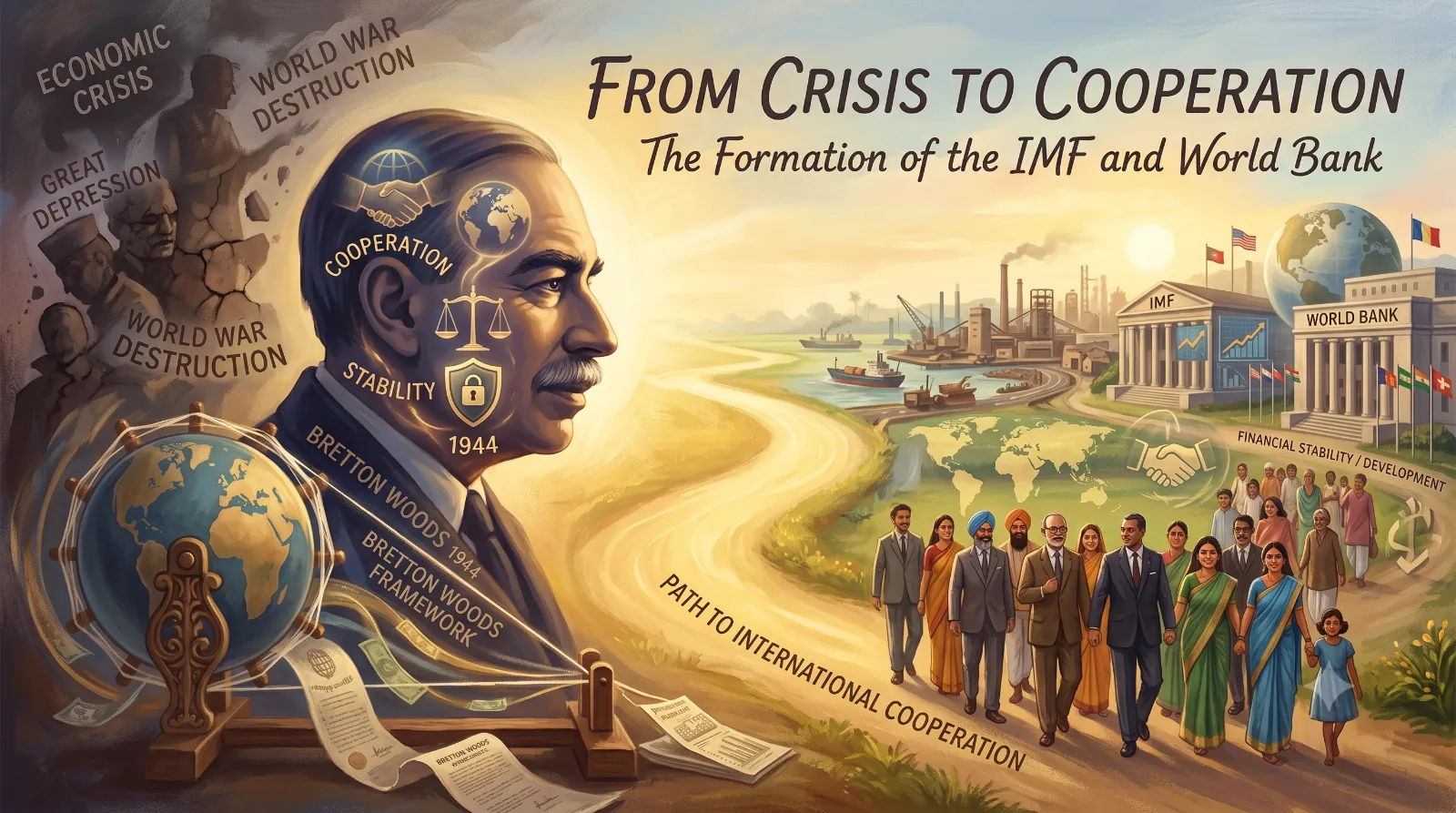
What happens when the economic problems of one country begin to affect the rest of the world?
What happens when the economic problems of one country begin to affect the rest of the world?
The economic crises of the first half of the twentieth century demonstrated that national economic policies could have consequences far beyond national borders. Competitive currency devaluations, protectionist trade policies, financial instability, and the collapse of the gold standard contributed to an increasingly fragmented international economy. The Great Depression exposed the weaknesses of this system, while the destruction caused by the Second World War made the need for international economic cooperation even more urgent.
Out of this crisis emerged two of the most important institutions in the modern international financial system: the International Monetary Fund (IMF) and the World Bank.
Their creation was not simply an economic development. It represented an attempt by states to build an international framework capable of promoting monetary stability, reconstruction, cooperation, and long-term economic development.
A World Without Economic Coordination
Before the Second World War, there was no comprehensive international institutional framework capable of coordinating global monetary and financial relations.
The interwar period was marked by competitive currency devaluations, protectionist trade policies, and declining international cooperation. The collapse of the gold standard further destabilised international economic relations.
Countries often responded to domestic economic problems through policies designed to protect their own economies. While these measures could appear beneficial from a national perspective, their collective effect could worsen international economic conditions.
The Great Depression demonstrated the consequences of this lack of coordination. Economic instability spread across borders, unemployment increased, international trade declined, and confidence in the existing financial system weakened.
The experience created a fundamental question for the post-war world:
How could states create an international economic system that was more stable and cooperative than the one that had existed before the war?
Bretton Woods and the Search for a New Economic Order
The answer began to take shape at the Bretton Woods Conference, formally known as the United Nations Monetary and Financial Conference, held in July 1944 in New Hampshire, United States.
Representatives from forty-four Allied nations gathered to discuss the structure of the post-war international economic system.
The conference was strongly influenced by two prominent economists, John Maynard Keynes of the United Kingdom and Harry Dexter White of the United States.
Although Keynes and White proposed different approaches to international monetary cooperation, both recognised the need for institutions that could promote stability and prevent the kind of economic disorder experienced during the interwar period.
The conference ultimately laid the foundation for two institutions that would become central to the international financial system: the IMF and the International Bank for Reconstruction and Development, which later became associated with the World Bank.
The International Monetary Fund
The International Monetary Fund was formally established in December 1945 and became operational in 1947.
Its central purpose was to promote stability within the international monetary system. The IMF was designed to encourage exchange rate stability, facilitate international trade, and provide financial assistance to countries experiencing balance of payments difficulties.
The basic idea was relatively straightforward.
A country experiencing a serious external financial problem might not have sufficient resources to stabilise its economy on its own. The IMF could provide financial assistance, allowing the country to address its immediate difficulties while maintaining greater stability within the international monetary system.
Member states contribute financial resources to the IMF through quotas. These quotas are important not only because they contribute to the institution's financial resources, but also because they influence aspects of members' participation in the organisation.
The IMF therefore emerged as an institutional response to a problem that had become clear during the interwar period: economic instability in one country could have consequences for the wider international system.
The World Bank and Post-War Reconstruction
The second major institution created through the Bretton Woods framework was the International Bank for Reconstruction and Development (IBRD).
The IBRD was established in 1945 and began operations in 1946. Its initial purpose was closely connected to the enormous reconstruction challenge created by the Second World War.
Entire economies and physical infrastructures had been devastated by the conflict. Rebuilding roads, industries, public institutions, and economic systems required enormous amounts of capital.
The World Bank's role subsequently expanded beyond post-war reconstruction.
Over time, its activities increasingly focused on long-term economic development, particularly in developing countries. It began providing financial and technical assistance for areas such as infrastructure, education, healthcare, and poverty reduction.
The institution also developed into the broader World Bank Group, reflecting the expansion of its activities and the emergence of different forms of development finance.
IMF and World Bank: Similar Origins, Different Roles
The IMF and World Bank are often mentioned together, but their functions are not identical.
The simplest distinction is this:
The IMF focuses primarily on monetary and financial stability, while the World Bank focuses primarily on long- term development.
The IMF may provide financial assistance to countries experiencing balance of payments problems or broader macroeconomic instability.
The World Bank, by contrast, generally supports longer-term development through financing and technical assistance for projects and programmes designed to improve economic and social conditions.
Their different roles reflect the different problems that the Bretton Woods system was designed to address.
The IMF was created to help maintain stability in the international monetary system.
The World Bank was created initially to help finance reconstruction and later became an institution focused increasingly on development.
Why Their Creation Mattered
The formation of these institutions represented a significant change in international economic governance.
Instead of leaving states to respond independently to international financial crises, the Bretton Woods framework created institutions through which states could cooperate on monetary and financial issues.
This institutionalisation of economic cooperation had wider consequences.
Greater monetary stability could facilitate international trade. Financial assistance could help countries manage economic crises. Development finance could support infrastructure and social development.
The IMF and World Bank therefore became important components of the emerging post-war international economic order.
Their creation also reflected a broader change in the understanding of international relations. Economic stability was increasingly viewed not simply as a domestic concern but as an issue requiring international cooperation and institutional coordination.
From Reconstruction to Development
One of the most significant developments in the history of the World Bank was the transition from its original reconstruction mandate towards broader development objectives.
Once the immediate reconstruction needs of post-war Europe began to decline, questions of economic development in developing countries became increasingly important.
The World Bank's activities expanded accordingly.
Financing infrastructure, supporting public services, improving access to education and healthcare, and addressing poverty became increasingly important elements of its work.
This evolution demonstrates how international institutions can change as the international economic environment changes. The problems facing the global economy in the 1940s were not identical to those facing developing countries several decades later.
The institution therefore evolved from its original post-war reconstruction role into a much broader development- oriented organisation.
The Continuing Relevance of Bretton Woods
The global economy has changed considerably since 1944.
The international monetary system has evolved, financial markets have become increasingly interconnected, and new economic powers have emerged. The challenges facing the global economy today also extend beyond the concerns that shaped the Bretton Woods Conference.
Yet the basic problem that led to the creation of the IMF and World Bank remains relevant:
How should states cooperate when economic problems cross national borders?
Financial crises, sovereign debt, development challenges, and global economic shocks demonstrate that national economies cannot always be considered in isolation.
The continued existence of the IMF and World Bank reflects the enduring importance of international economic institutions in addressing these shared problems.
Conclusion
The IMF and World Bank emerged from a period in which the international economic system had experienced extraordinary instability.
The Great Depression exposed the consequences of weak international economic coordination, while the Second World War created an urgent need for reconstruction and financial cooperation.
The Bretton Woods Conference of 1944 provided the institutional foundation for addressing these challenges.
The IMF was created primarily to promote monetary stability and assist countries facing balance of payments difficulties. The World Bank initially focused on reconstruction before expanding its role towards long-term economic development.
Their formation therefore represented more than the creation of two financial institutions. It marked an attempt to build an international economic order based on cooperation, institutional coordination, financial stability, and development.
The world economy has changed dramatically since Bretton Woods, but the central idea behind the system remains relevant. In an interconnected global economy, economic instability rarely remains confined within national borders. The institutions created in the aftermath of the
Comments
You may also like
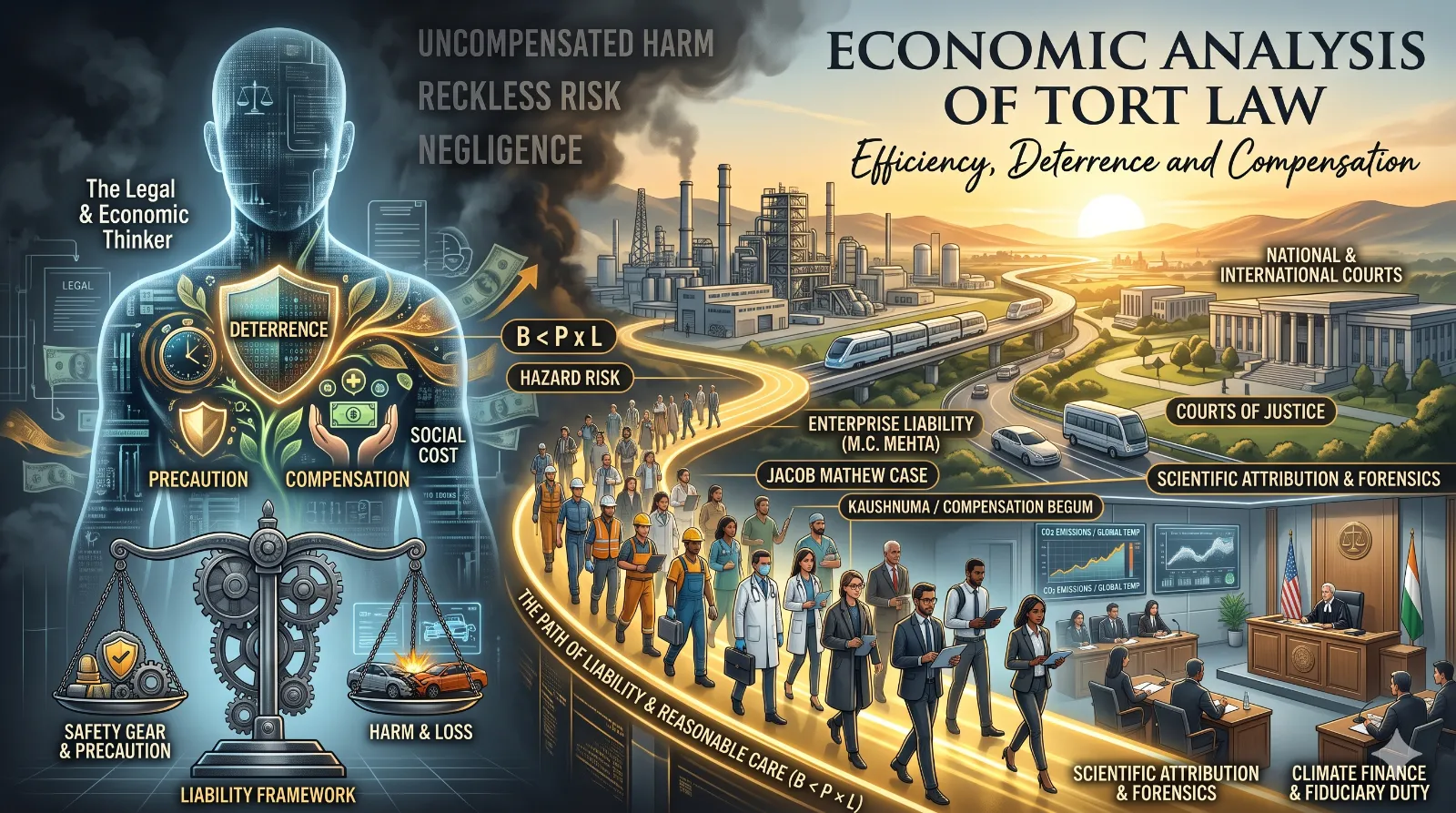
Economic Analysis of Tort Law: Efficiency, Deterrence and Compensation
When someone causes harm to another person, tort law asks a familiar question: who should bear the loss?
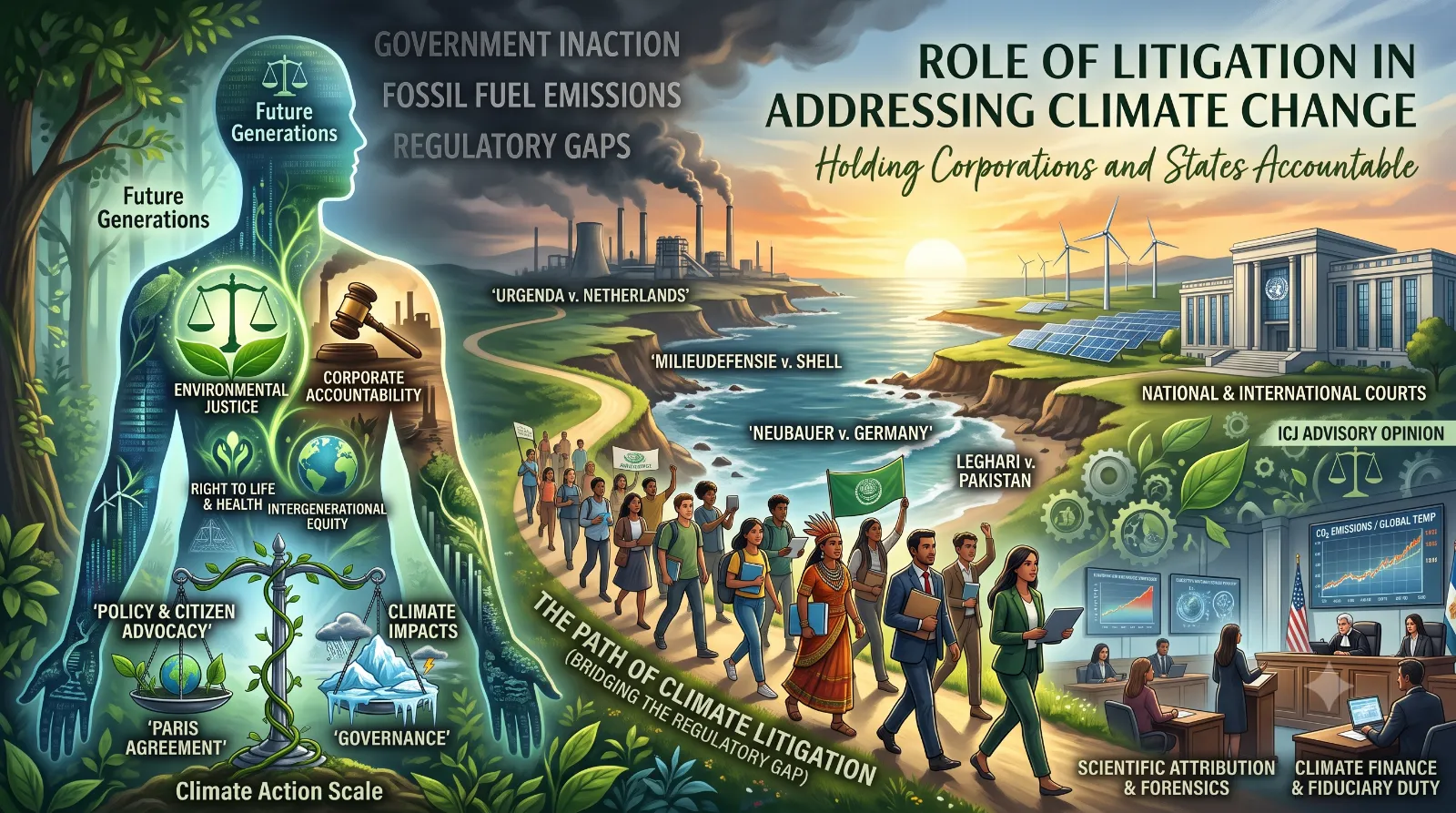
Analysing the Role of Litigation in Addressing Climate Change
Climate change, caused by the buildup of greenhouse gases (GHGs) in the atmosphere, has resulted in increasing global temperatures, occurrence of extreme weather events, melting glaciers, and sea level rise. The inability of some governments and corporations to fulfill their climate obligations has raised a crucial question: Can litigation be used to bridge the regulatory and policy gaps left behi

Asymmetric Cryptography: How Public Keys Secure the Digital World
The modern legal system increasingly operates in a world where documents are created, signed, transmitted, and stored without ever taking physical form. Contracts are accepted through emails, government documents are digitally signed, banking transactions are authenticated electronically, and evidence that once existed only on paper may now consist of messages, server logs, CCTV footage, cloud rec